Bookshelf
201 books.
2026 3 books
-
 Life in Perspective
-
 The Prophet's Pulpit: Commentaries on the State of Islam
-
 A Prayer for Spiritual Elevation and Protection
2025 10 books
-
-
-
-
-
-
-
Shikwa and Jawab-i-Shikwa: Iqbal's Dialogue with Allah
My review
Though the beauty of Iqbal's poetry can only be relished in its original language, Kushwant Singh does a great job in communicating the essence of these two poems for his English readers in this translation.
-
-
 American Kingpin: The Epic Hunt for the Criminal Mastermind Behind the Silk Road
My review
Very gripping read.
2024 5 books
-
 Project Hail Mary
My review
Well, it was an interesting read, and that's the reason for 4 stars. The book kept me hooked, engaged and some dopamine hits.
But if I compare this to "the Martian" it doesn't even come close. It's another rehashed Martian story. At times, the parallels were crystal clear. You have one person stranded in space, with no connection to earth. Needs to figure out a way to survive and communicate with another life form. And finally, there is a choice that needs to be made between going home in less time or saving another entity and not going home...In the midst of all this you get excellent commentary on the basic sciences that help this one person do stuff.
-
-
-
-
2023 10 books
-
-
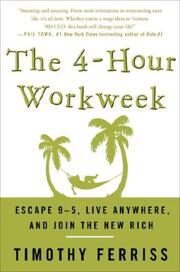 The 4-Hour Workweek
My review
I resisted the book for too long, but the hype finally got to me, so I picked it up on a lazy evening and was not impressed. It certainly did not live up to the hype.
There is some decent advice here and there, but it is not the book for me. Maybe it works for someone with the business motivations where they want to sell something, and their work is just that: sell stuff.
It is hard to apply the advice in that book that requires you to work in a team with tools and technologies that cost a couple of million—for example, self-driving vehicles or rockets.
Moreover, the book kind of creates a disparity and is not for everyone. For example, the book requires there to be people who do the low-level stuff so some people can experience being the NR—specifically, the low-paid workers in developing countries.
Maybe it’s that I am only exposed to working in Europe, where work-life balance is prioritised. So, I don’t need to invent ways to get away from the office, even if it is a 9-5 job that I do. I get six weeks of paid vacation and the possibility to work away from the office as long as teamwork is not needed on physical hardware.
-
-
 Attached: The New Science of Adult Attachment and How It Can Help You Find—and Keep—Love
My review
It was worth reading the book only to understand the underlying theory, apart from that, I did not agree much with the contents.
The book divides people into strict categories. Though early on, there is a mention of a spectrum where one can find themselves, this idea seems abandoned after the different attachment styles are introduced. In the book's latter half, the focus is on how the different attachment styles navigate relationships. But this part seemed very fluffy and biased. I would be more interested to read further on the development of the different attachment styles and their origins.
A final point, the focus of the attachment styles was on romantic relationships, which I think is too focused for a book about attachment styles. These attachment styles reflect in every relationship in life and can take different forms.
-
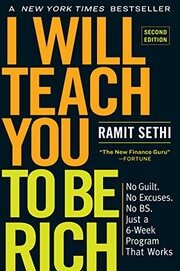 I Will Teach You to Be Rich: No Guilt. No Excuses. No BS. Just a 6-Week Program That Works
My review
Decent advice on handling money, but focused on the US markets and not so much for other regions—essentially a blog post with too much fluff and a tone that wasn't too much fun to read.
-
-
-
-
-
2020 15 books
-
-
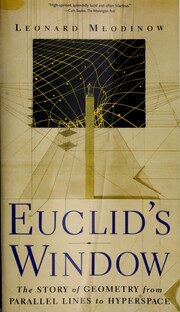 Euclid's Window: The Story of Geometry from Parallel Lines to Hyperspace
My review
I found this to be an interesting book. It briefly highlights the history of Geometry, starting from the Greeks up until the present day.
I liked the fact that the author does not only focus on the technical aspects but also gives a window into the lives of the mathematicians that have contributed. Firstly, this humanizes the many names we tend to repeat regularly. Secondly, it gives a glimpse into the society the gave rose to these great minds.
I have two main complaints about this books:
1. It presents the whole history to be centered in Europe and, to some extent, the US. This is a dangerous precedent set where other contributions from other regions and cultures are totally neglected.
2. The explanations(using examples) of simple concepts were long-drawn and a drag to read. Maybe this was so because I knew these explanations. However, the complex ideas were just presented as they are, without any examples. Specifically, in the final chapter, it felt like the author just wanted to finish the book.
Overall, I think It is a good read. But I will be on the look out for a book that also talks about non-European contributions.
-
-
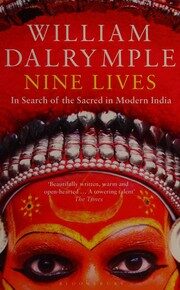
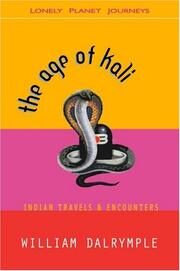 The Age of Kali: Indian Travels and Encounters
My review
This was a fascinating read.
The book is a series of short essays in which Dalrymple shares his experience as he travels across India as a journalist. Sort of like a Behind-The-Scenes of journalism. The underlying theme of all the essays points towards society's decadence.
Having been a child of the '90s and reading this book in 2020 was like looking at a snapshot of life back then and allowing me cognizance of the language and symbols referenced in the book. Furthermore, taking the book as a reference and looking at the present, one can undoubtedly see "the age of Kali" all around us.
My favorite essay, I think, was the one about Bangalore. It was certainly refreshing to look back and relive the Bangalore of the '90s.
What shocked me was to read about the atrocities committed by the Indian state during the military take over of Hyderabad and Goa. I would love to learn more about these events if I can find any good books detailing the history.
-
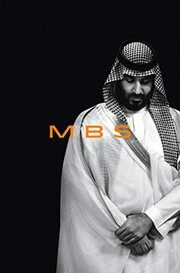 MBS: The Rise to Power of Mohammed bin Salman
My review
The story about the rise of the young Machiavellian crown prince of Saudi Arabia. The book sheds light on the young prince and his quest to transform Saudi Arabia. Ben Hubbard, writing in a captivating style, sheds light on the politics and policies, from lifting the driving ban and trying to break the shackles of conservatism, to the murder of Jamal Khashoggi.
-
 How to Take Smart Notes
My review
This is a book I recommend for every student. I wish I had come across it earlier in my education. Unfortunately, the techniques discussed in this book are not introduced to students early in their curriculum.
-
 Atomic Habits: An Easy & Proven Way to Build Good Habits & Break Bad Ones
My review
The book provides a brief insight into how we(humans) develop and sustain habits. While nothing in the book was surprisingly new to me, the collection and presentation of all the advice in a coherent manner is one reason to read the book at least once.
-
-
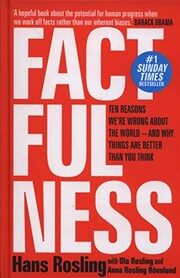 Factfulness: Ten Reasons We're Wrong About the World – and Why Things Are Better Than You Think
My review
A short introduction to cognitive biases that make us perceive the world in a negative light. Taking a very high-level view of the world, and equipped with data, Rosling explains how the global trends are towards making the world a better place than what we perceive it to be. Through the book, he explores the 10 psychological facets that cause us to think negatively of the world and offers a way to avoid them.
-
-
-
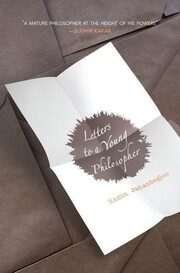 Letters to a Young Philosopher
My review
Short essays on various topics written in the form of letters from a senior/master philosopher to his young colleague. While I enjoyed most of the letters, the style of writing, and the chosen topics, some letters lacked a clear direction. Also, in the last letter, the author (of the letters) is on his death bed it wasn't entirely clear to me what the author wanted to draw attention to.
-
-
-
2019 28 books
-
 Who We Are and How We Got Here: Ancient DNA and the New Science of the Human Past
My review
An introduction and survey into the study of DNA analysis to understand human history. I was suggested this book after complaining about Sapiens, which was quite biased. Compared to Sapiens this was an insightful book, and inclusive of the different parts of the world. The ethical reflections by the author in part 3 of the book are interesting and important for anyone interested in the study of human genome.
-
 Islam and the Destiny of Man
My review
A very lucid introduction to Islam and what it means to a believer. Unlike most of the other introductions that try to be objective and focus only on the subject of Islam, this book is written exploring the relationship to man, specifically in the modern age. It is important to note that this book, and the author, are a product their time.
-
-
 The Autobiography of Malcolm X
My review
Malcolm was a man of his time, shaped by the society he lived in. What is most remarkable about him is his eagerness to evolve himself. When in prison, he read everything he could lay his hand on developing his beliefs and philosophies. After prison, he spent the next 12 years in dedicating his life to the Nation of Islam, towards transforming the lives of his Afro-American brothers using the philosophy of Elijah Muhammad, as it had once transformed him. During this time, he fought and blamed all Whites for the current condition of the Black community. When he finally broke away from the Nation of Islam and traveled the world, he soon came to see beyond racial lines and then became a staunch human rights activist.
In this book, Malcolm, candidly, reflects on his life while (almost) dictating it to Alex Haley. The book was written during the last two years of Malcolm's life; these were the most dynamic period of his life. It offers us insight into the events that shaped his life and also, to some extent, the evolution of his ideology. I hope to read his speeches and his dairy to get more insight into his thoughts after his break from the Nation of Islam.
There are several things to unpack in this book. The most important is the racial problem that existed and still does, where the marginalized community is conditioned to believe that they are of a lower stature to the dominant community; this is true even of today for many communities around the world live as if their minds are still "colonized."
By the end of the book, the study of Malcolm's life was, for me, a byproduct of everything I had learned from the book. What the book presents is that Malcolm X was, like anyone, at the end of the day, human. He had his set of flaws. It still amazes me how his strong views, on the mistreatment of blacks, did not help him see the parallels in his thoughts towards women; though, he was surrounded and supported by two very strong women -- his wife Betty and his sister Ella. As humans, in spite of our flaws, the essence of life is the pursuit of truth and justice. In that, his life has lots to offer us.
-
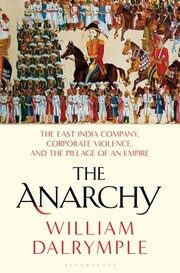 The Anarchy: The East India Company, Corporate Violence, and the Pillage of an Empire
My review
In a world plagued with misinformation, alternate facts, and whitewashed histories, William Dalrymple has done a fantastic job presenting a much needed nuanced picture of history/politics in the 18th century India. Today, the colonization of India is either glorified as a blessing or spoken as evil, depending on whom one talks to, while the Mughal rule is looked upon as evil. In this book, Dalrymple presents a nuanced history of the time, showing the politics that were played out, eventually giving rise to the British colonial project in India.
One thing that struck me was the stark contrast in narratives we learn in school, as children, and how that has given rise to the sectarianism found in India these days. For example, in school, we read about the Maratha wars against the Mughal empire. However, we never learn that it was the Marathas that helped bring back Mughal Shah Alam to the thrown in Delhi in 1772. The Mughal rule continued until 1857, though, as a mere puppet to the British. During the first war of Independence that took place in 1857, self-organized armies, both Hindu and Muslims, came to Bahadur Shah Zafar to seek his blessings/permission before going out to war. There is ample evidence to show that sectarianism was a fringe problem in Mughal India. And if we are going to teach history in schools, let it be a more critical history taking into account the politics of that time; so we can learn, and not repeat the mistakes of the past.
-
-
-
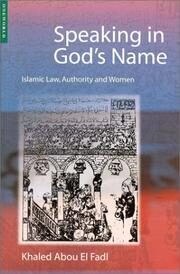 Speaking in God's Name: Islamic Law, Authority and Women
My review
A much-needed discussion on Authority and Authoritarian within Islamic Law. In this, rather dense, book, the author deconstructs the authoritarian nature that has seeped into the modern discourses on Islamic Law. Drawing from the vast resource of jurisprudential debates of the past, he presents the methodological requirements that need to be fulfilled when delving into the legalities of and developing, legislation from Islamic sources. Throughout the book, the authoritarian nature of Islamic law that has had a devastating impact on women--mainly in the modern world-- is taken as a case study to bring out the differences between authority and authoritarian.
Though this is a very dense book and a tough read for the uninitiated to Islamic law, I think it is a must-read for anyone who wants to critique, and also improve the Islamic Jurisprudence. It is, however, recommended to start with the author's other books Reasoning with God: Reclaiming Shari'ah in the Modern Age and Search for Beauty in Islam: A Conference of the Books before picking this one.
-
Jihad, Violence, War and Peace in Islam
My review
A (very) short primer on Jihad (struggle) in Islam.
A good introduction for someone interested in the concept of Jihad. It is, however, very brief for an interested reader. Specifically, the book does not provide a broader context about Islam for the reader to understand the nuances.
-
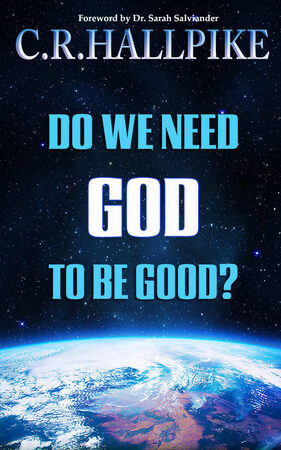 Do We Need God to be Good?: An Anthropologist Considers the Evidence
My review
This book was suggested to me after I finished Sapiens: A Brief History of Humankind and had significant problems with the way the author treats the reading of religion.
This book by an anthropologist C. R. Hallpike is an academic work, unlike Sapiens. In this, he goes to explores the problems that have been handled by religion through the centuries. However, the main focus of the book is to expose and provide counter-arguments to the atheistic arguments posed by the likes of Dawkins; more specifically, the evolutionary biological view of human societies.
The book reads like a series of essays on different but interconnected topics grouped under four chapters. The first of which deals with the different aspects of human nature and explored what makes man unique in the universe. In the second chapter, the author looks at the relationship between morality and religion; while, briefly highlighting the evolution of religion and what it meant to man. The third chapter looks at Humanism in particular and its various facets and how these have come to define the world around us today.
The last chapter was harder to read compared to the previous ones. It presents the five different atheistic utopias that have existed in the world so far. These can be classified as utopias that aim to promote individualism (e.g., Objectivism) and others where the state becomes more important than the individual (e.g., Communism).
What I liked about this book was the author does not keep a narrow definition of religion, he isn't informed about religion from the general stereotypes that are portrayed in media. His view on religion is broad and not constricted to that of the Abrahamic faiths. He is inclusive of various definitions of religion that have been used by different societies and tribes over time. He does not talk in generalizations about topics he does not seem to know. If, and when, there was a need to discuss specific theological points, he reverts to Christian theology but makes it clear as to why he chooses to speak about Christianity in particular.
-
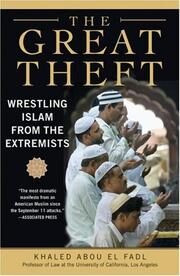 The Great Theft: Wrestling Islam from the Extremists – A Scholar's Defense of Moderate Muslims and the Future of the Faith
My review
The book comes at a critical time when most of the discourses on Islam are filled with puritan rhetoric. It provides the fundamental differences in thought, logic, and sources followed by puritans and moderates. The first part of the book briefly highlights the historical background of the development of Puritan thought in Islam. The second part starts with the common ground between both the groups, followed by a discussion on the differences in the following areas: Theology, law and morality, approaches to history, democracy and human rights, and social interaction. Two additional chapters on Jihad and The role of women are added since these are the most misunderstood aspects, and existing discourses are mainly from the puritan point of view.
The book is meant for everyone interested in understanding the differences between the two groups, in that sense, I think, it is self-contained. However, some parts in the book are vague and miss certain nuances; for this, I suggest reading Reasoning with God: Reclaiming Shari'ah in the Modern Age alongside.
-
-
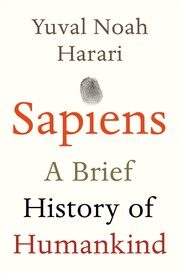 Sapiens: A Brief History of Humankind
My review
The book was easy to read and engaging too. I picked it up hoping for it to be at least a popular science book that introduces the different facets of study in anthropology, providing a reference list for further more in-depth studies. However, it felt like a reductionism of specifically chosen concepts to create a somewhat fictional storyline.
While discussing the rise of monotheism and debunking historians who provide deterministic explanations of events such as the rise of Christianity, the author says the following:
Yet most historians tend to be skeptical of such deterministic theories. This is one of the distinguishing marks of history as an academic discipline – the better you know a particular historical period, the harder it becomes to explain why things happened one way and not another. Those who have only a superficial knowledge of a certain period tend to focus only on the possibility that was eventually realized. They offer a just-so story to explain with hindsight why that outcome was inevitable
This, I think, can be applied to this book. This book generalizes so many historical events that one can use the same line of reasoning to establish any conclusion one wants. Selection bias, a commonly known term in the statistical literature, is to choose samples in a particular way that confirms your own hypothesis. This book does something very similar, but instead of selecting specific events, the author seems to omit facts rather easily.
http://www.ashfaqfarooqui.me/posts/2019/sapiens/
-
-
-
-
-
-
-
-
-
-
-
-
-
2018 23 books
-

-
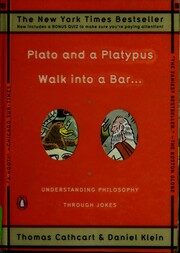 Plato and a Platypus Walk Into a Bar: Understanding Philosophy Through Jokes
My review
This was a casual read. The jokes were good, and the philosophy discussions tied well to the jokes. This is a book one can come back to refresh certain concepts.
It must be noted that this isn't a book for the uninitiated. The book does not introduce the philosophies or the philosophers. So its always best to have some idea about western philosophy beforehand.
I guess my main complaint about the book is, it was too short. Some of the ideas are skirted over. While many philosophical ideas are not even presented. Though the book starts from the time of Plato, it follows only the major western philosophies/philosophers from the 16th century onwards; leaving us with a huge gap.
For what has been presented, it does a good job. It helps the reader appreciate the underlying logic and ideas through a set of jokes.
-
-
-
-
-
-
-
-
-
-
-
-
-
-
-
-
 The Taste of Words : An Introduction to Urdu Poetry
My review
A brief introduction to Urdu poetry over the ages, this book takes us through the development of Urdu poetry. From Amir Khusro to Zeeshan Sahil. The book is chronologically written and divided based on authors. Each author has a short biography followed by one or more poems. The choice of poems was enjoyable.
The biography for each author was short and concise. However, it would have been interesting to hear a few more words about the author and his work. At least, some more introduction to the poems chosen. This was done for some but not all poems.
Me, being not so great at reading the urdu script it was great to have a book with transliterations. I have not found many books similar to this, and hence should not complain about the transliterations. The translations were decent and sometimes not the best. I think there exist better form of translations for interested readers. As many reviewers of this book have stated, a word to word translation of the poems would have been great actually! Or, at least the meaning of certain keywords that are fairly advanced should have been included.
All in all, it was a delight reading the book. Listening to the different rendetions of the poems and exploring other peoms by the poets is something to do while reading this book.
-

-
-
-
-
2017 32 books
-
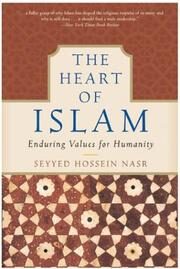 The Heart of Islam: Enduring Values for Humanity ― A Guide to the Spiritual Side of Islam
My review
The books aims to present Islam to the general public; and it surely does a great job, as noted by others on this forum too, by maintaining a balance between the tenets of Islam and Practical Islam as it is followed today in the world.
My only problem with the book was when the author used comparisons to bring out a point. These comparisons, while with the best of intentions, were not well explained or too short. Hence many a times it was hard to see if they delivered the point or just ended up being apologetic.
-
-
-
-
-
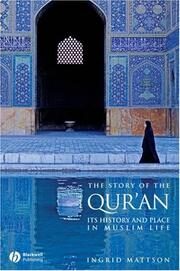 The Story of the Qur'an: Its History and Place in Muslim Life
My review
Dr. Mattson has presented in this book the different facets of approaching the Quran. The text is crisp and makes the content easy for any interested reader.
The book an academic work and does justice by providing the various views and briefly looks at the evolution of such views. More importantly, it gives sufficient references for interested readers to further explore the various themes.
Personally, it was the kind of book I was missing. There are many books that get into the depths of various schools of thinking and facets of the Quran, this was a good survey to keep in mind before delving further.In my view, what In the Footsteps of the Prophet: Lessons from the Life of Muhammad by Tariq Ramadan was to the Sira, The Story of the Qur'an: Its History and Place in Muslim Life was to the history and development of Quranic sciences.
I would have liked some more contemporary and controversial issues to have been discussed. But, I presume that would have changed the balance and also thrown the book off-course.
-
-
-
-
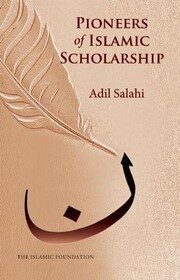 Pioneers of Islamic Scholarship
My review
This book is a short biography of 11 prominent scholars who have been instrumental in directing the course of Islamic scholarship, specifically in the field of Fiqh. The scholars discussed are: Abu Hanifa founder of the Hanfi school; Malik ibn Anas founder of Maliki school; Muḥammad ibn Idris al-Shafii founder of Shafi school; Aḥmad ibn Ḥanbal founder of Hambali school; Alī ibn Ḥazm a major figure within the Zahari school; Ja'far al-Sadiq associated with the Jafri school; the Zaidi school following teachings of Zayd ibn Ali; Abdullāh ibn Ibāḍ and Jābir ibn Zayd founders of the Ibadi school. Apart from these few other scholars that have had a major impact are also discussed namely Izz al-Dīn ibn Abd al-Salām and Ibn Taymiyyah.
Each scholar is discussed with regards to his personal attributes, socio-political activities, and approach to scholarship. Then, briefly, the author discusses the core tenants of the school founded and their specific contribution to the advancement of scholarly debates. There is an additional emphasis laid to bring to light the mutual relations between the scholars and how they influenced each other. Particularly in today's day and age when the differences between the schools of
fiqh are hotly debated, The knowledge of the original similarities and differences throws light on the prevailing atmosphere during their times.
One major factor that this book lacks is the portrayal of all the scholars are perfect people. I believe each person has in himself traits, both good and not so good, that shape her/his intellect and
world view. The book does not address these traits that might be perceived in a negative light.
The first nine scholars discussed lived in more or less the same time period. Hence the social, political, and moral frames did not differ for each one. However the other two scholars discussed lived 5-6
decades after the first set. By this time there were significant changes to all three spheres mentioned previously. I would have liked it better if the author would present the differences in scholarship
in the light of their own surroundings. As an example, the first set of scholars lived during a time when Islam was growing, both in numbers and conquests. While the latter two lived at the time of
political upheaval, military raids by Mongols from the east, Crusades on the west; which was a big challenge and resulted in them reading the sources with the lens of their society.
Apart from the above mentioned criticism I strongly object to the reference made in the book towards "deviant sects". The author does not give any reason why he refers to them as "deviant". By this I felt
the author was putting his own personal views on the subject.
To conclude, I think this is a well written and easily accessible book for anyone who wants to start understanding the different schools of Fiqh.
-
-
-
-
-
-
-
 Islam: The Essentials
My review
A concise, balanced, easy-to-read, introduction, to Islam, its historical landscape and the contemporary challenges.
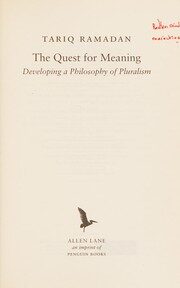
Apart from the historical and factual side of the book, I personally find this book to be a simplified and more accessible version of Ramadan's earlier book Quest For Meaning; presented from an Islamic perspective.
-
-
-
-
-
-
-
-
-
-
-
-
-
-
-
2016 15 books
-
-
-
-
-
-
-
-

-
-
-
 Islamic Philosophy: A Beginner's Guide
My review
A very brief and crisp introduction to the evolution of Islamic thought over the centuries.
-
-
-
-